
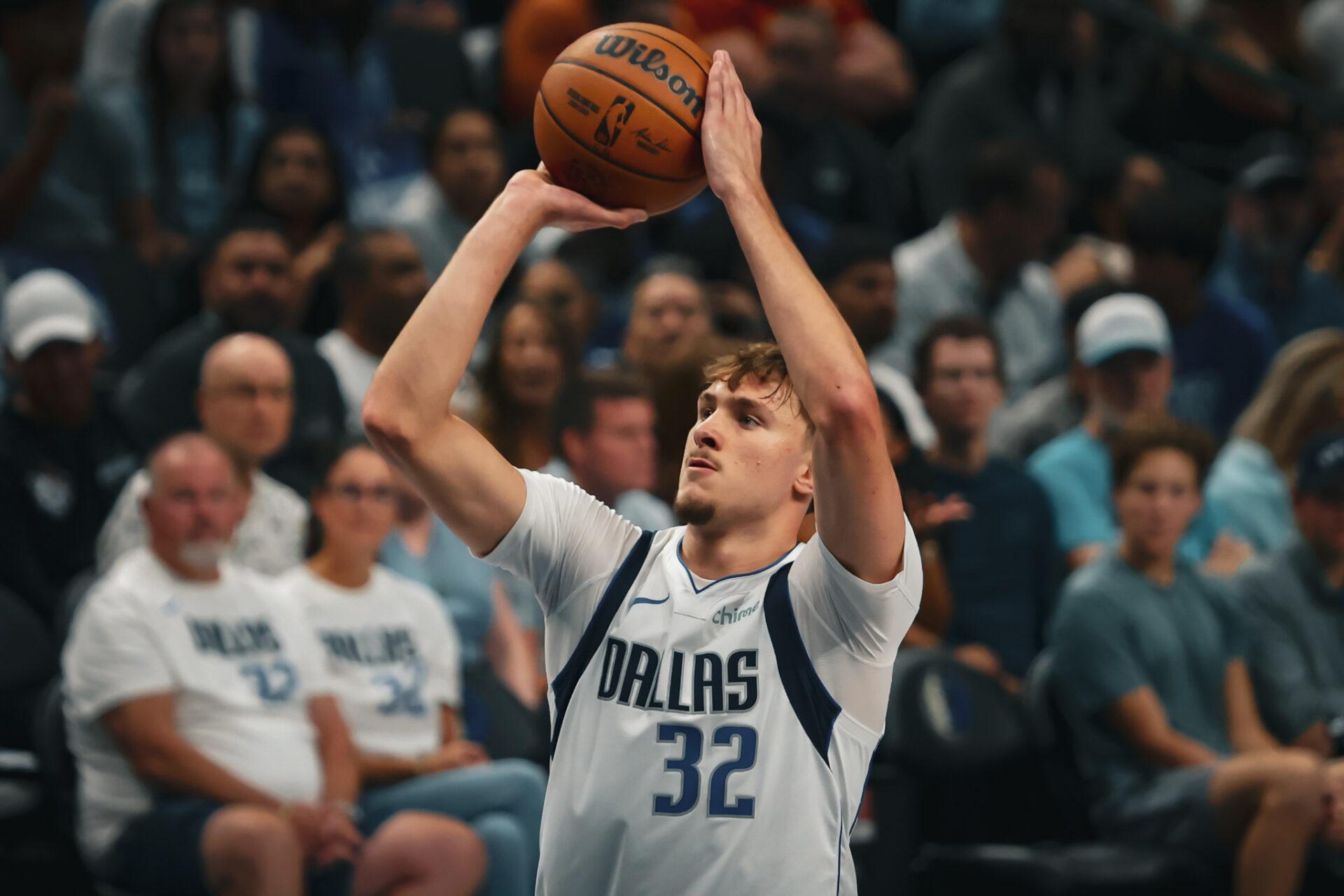
DALLAS — Cooper Flagg’s rookie season answered one of the biggest questions facing the Dallas Mavericks. The next question is considerably more difficult.
Can Flagg become the franchise player capable of leading Dallas back into championship contention?
Flagg’s first NBA season left little doubt about his long-term potential. The 2025-26 NBA Rookie of the Year and unanimous All-Rookie First Team selection averaged 21.0 points, 6.7 rebounds, 4.5 assists, 1.2 steals and 0.9 blocks while appearing in 70 games. More importantly, he showed an ability to impact winning without relying solely on scoring.
Now the Mavericks are entering a new chapter under first-year head coach Dusty May.
May arrives with a reputation for player development, offensive creativity and building disciplined, connected teams. Throughout his coaching career, his best teams have been defined by ball movement, defensive accountability and players capable of making decisions with the basketball instead of simply finishing plays. Those principles align naturally with Flagg’s skill set.
Unlike many young stars, Flagg doesn’t need the offense built entirely around him to influence a game. His passing vision, ability to push the ball in transition and willingness to defend multiple positions make him an ideal centerpiece for a system that values versatility and unselfish basketball.
The Mavericks also enter the season with a veteran core that should ease Flagg’s continued development rather than force him to carry the franchise by himself.
Dallas’ offseason emphasis has been on surrounding its young cornerstone with experienced players who understand playoff basketball while adding depth that allows the coaching staff greater lineup flexibility. That balance gives May options to play bigger or smaller, switch defensively across multiple positions and keep Flagg involved in a variety of offensive actions instead of asking him to create every possession.
That may ultimately be the Mavericks’ greatest advantage.
Instead of placing unrealistic expectations on Flagg to become a 30-point scorer overnight, Dallas can continue expanding his responsibilities organically. One night he may be the primary scorer. Another night he may function as the secondary playmaker or defensive stopper. His versatility gives May the freedom to adjust based on matchups, something few second-year players are capable of handling.
The next phase of Flagg’s development will likely have less to do with statistics and more to do with efficiency, leadership and consistency.
As opponents spend an offseason studying his tendencies, they’ll force him to make quicker reads, attack different coverages and become more efficient in late-game situations. Those are the adjustments every emerging superstar faces, and how Flagg responds will determine whether he makes the leap from rising star to perennial All-NBA candidate.
Defensively, his importance may be even greater.
Flagg already demonstrated the instincts and versatility to defend guards, wings and bigger forwards during his rookie campaign. Under May’s system, expect those responsibilities to expand as Dallas looks to build a defense capable of matching the elite offenses throughout the Western Conference.
That challenge won’t be easy.
The conference remains loaded with championship-caliber teams, leaving little margin for error over an 82-game season. Dallas has the talent to remain in that conversation, but sustained success will depend on how quickly its new head coach establishes his identity and how rapidly Flagg evolves into one of the league’s premier two-way stars.
The Mavericks no longer have to wonder whether Cooper Flagg belongs among the NBA’s best young players. He answered that question during his rookie season.
The focus now shifts to something much bigger: whether Flagg and Dusty May can transform individual promise into team success. If they do, the Mavericks won’t simply be building for the future—they’ll be positioned to compete for championships.