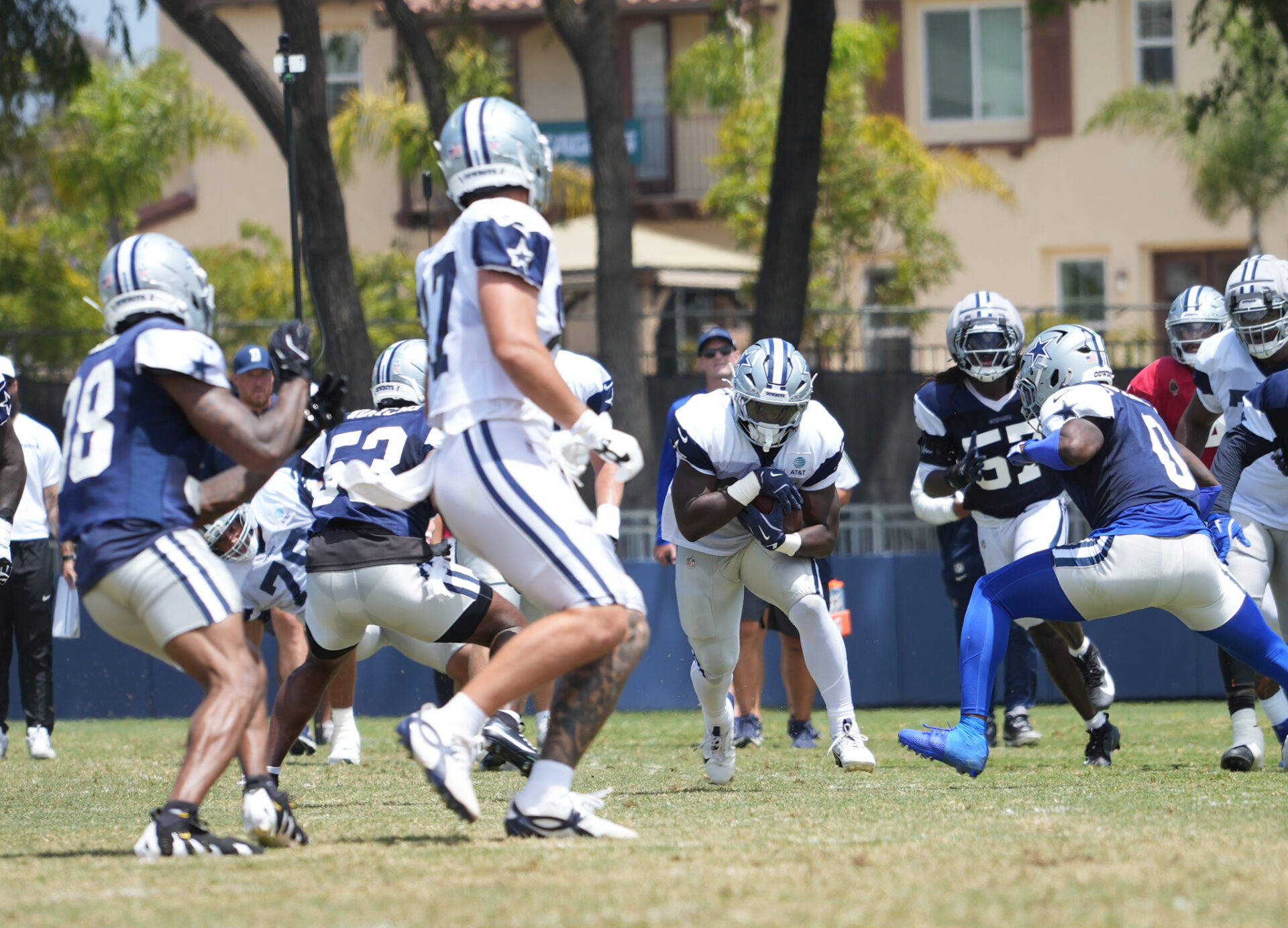
OXNARD, Calif. — When the Dallas Cowboys put on the pads for the first time in training camp, the shift in energy is immediate.
The sound of popping plastic and clashing shoulder pads signaling a return to real football replaces the non-contact drills of opening week. But for the coaching staff, day one in full gear is less about violent hits and more about baseline discipline.
“There’s no mistaking why you would do a review day the first day of pads,” the head coach noted, addressing reporters on the field. “You don’t want guys going the wrong way bumping into each other… We want to play with great pad level and urgency, but stay off the ground.”
Controlled Intensity on Day One
The focus throughout the session remained strictly on fundamental mechanics rather than live tackling. The staff instituted a “wrap-and-release” approach for ball carriers to preserve player health and maintain proper angles without taking teammates to the turf.
Save for the trenches, heavy one-on-one matchups were intentionally held off until the second padded session. Day one served as an acclimation period for players to check equipment fit, acclimate to carrying full weight, and lock in operational tempo before the physical intensity escalates.
Red Zone Execution & Line Play Take Center Stage
Fixing inside-the-20 execution has been a core focus since Phase 1 of the offseason. Self-inflicted penalties repeatedly stalled drives last year, forcing the unit to settle for field goals far too often. Coaches noted that the roster possesses too much talent to leave points on the field in scoring territory.
Beyond scheme tweaks, the offensive engine runs directly through the front five. While skilled pass-catchers command headline attention, moving defenders backward at the line of scrimmage remains the benchmark for how far this offense can travel. Practice battles along the interior offensive line are expected to set the tone for the entire team.
Roster Depth & Preseason Management
Injuries across the defense have opened immediate reps for younger talent. Secondary depth has stepped up in particular, with young safeties showing quick triggers and positional versatility while taking on primary snaps.
Evaluating the complete 53-man picture remains an ongoing process. Staff members divide player workloads into four distinct snap-count tiers during the preseason—ranging from established starters who will sit out, to developmental players receiving heavy workloads. The true assessment of roster depth will sharpen after back-to-back joint practices and early exhibition games.